| Nazwa marki: | ZMSH |
| MOQ: | 1 |
| Cena £: | by case |
| Szczegóły opakowania: | niestandardowe kartony |
| Warunki płatności: | T/T |
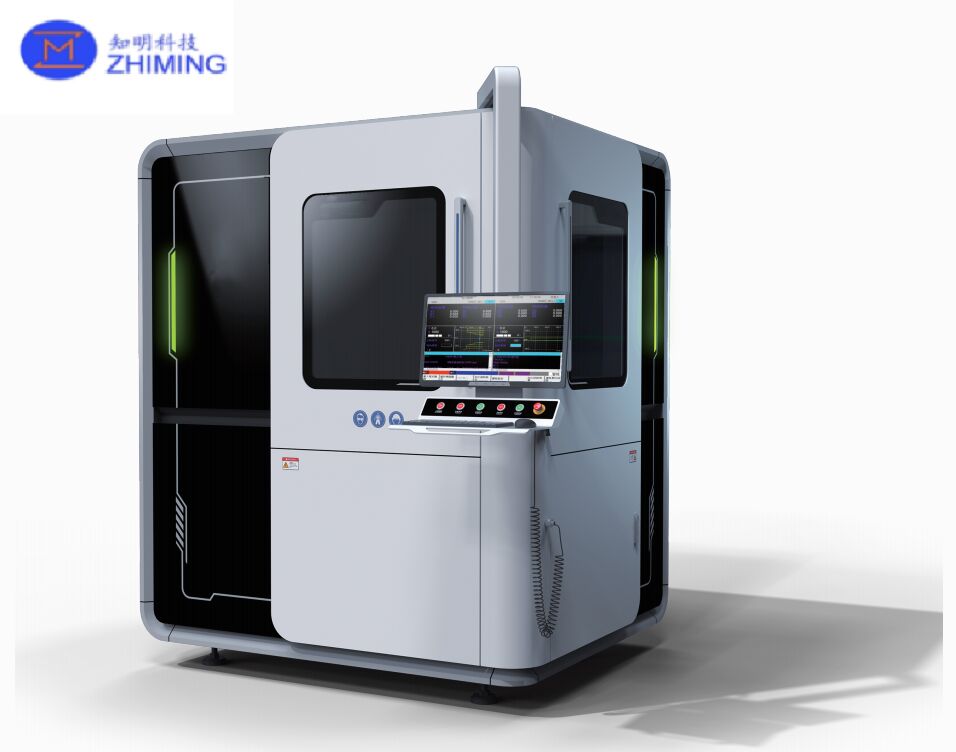
Microjet laser technology is an advanced, widely adopted hybrid micromachining method that couples a “hair-thin” water jet with a laser beam. Using a total internal reflection guiding mechanism similar to an optical fiber, the water jet precisely delivers the laser energy to the workpiece surface. During processing, the jet continuously cools the interaction zone and efficiently removes generated debris and powder, supporting a cleaner and more stable process.
As a cold, clean, and highly controllable laser process, microjet laser technology effectively mitigates common issues associated with dry laser machining, including heat-affected damage, contamination and redeposition, deformation, oxidation, microcracks, and kerf taper. This makes it particularly well suited for hard and brittle semiconductor materials and advanced packaging applications where yield and consistency are critical.
![]()
Diode-pumped solid-state (DPSS) Nd:YAG laser
Pulse width: μs/ns options
Wavelength: 1064 nm / 532 nm / 355 nm options
Average power: 10–200 W (typical rated levels: 50/100/200 W)
Filtered deionized (DI) water, low-pressure/high-pressure supply as required
Typical consumption: ~1 L/h (at a representative pressure of 300 bar)
Resulting force is negligible: < 0.1 N
Nozzle diameter range: 30–150 μm
Nozzle materials: sapphire or diamond
High-pressure pump module
Water treatment and filtration system
| Item | Config A | Config B |
|---|---|---|
| Working travel X×Y (mm) | 300×300 | 400×400 |
| Z travel (mm) | 150 | 200 |
| XY drive | Linear motor | Linear motor |
| Positioning accuracy (μm) | ±5 | ±5 |
| Repeatability (μm) | ±2 | ±2 |
| Max acceleration (G) | 1 | 0.29 |
| CNC axes | 3-axis / 3+1 / 3+2 | 3-axis / 3+1 / 3+2 |
| Laser type | DPSS Nd:YAG | DPSS Nd:YAG |
| Wavelength (nm) | 532/1064 | 532/1064 |
| Rated power (W) | 50/100/200 | 50/100/200 |
| Water jet diameter (μm) | 40–100 | 40–100 |
| Nozzle pressure (bar) | 50–100 | 50–600 |
| Machine size W×L×H (mm) | 1445×1944×2260 | 1700×1500×2120 |
| Control cabinet size W×L×H (mm) | 700×2500×1600 | 700×2500×1600 |
| Equipment weight (t) | 2.5 | 3.0 |
| Control cabinet weight (kg) | 800 | 800 |
Surface roughness: Ra ≤ 1.6 μm (Config A) / Ra ≤ 1.2 μm (Config B)
Drilling/opening speed: ≥ 1.25 mm/s
Circumferential cutting speed: ≥ 6 mm/s
Linear cutting speed: ≥ 50 mm/s
Applicable materials include gallium nitride (GaN) crystals, ultra-wide-bandgap semiconductors (e.g., diamond, gallium oxide), aerospace specialty materials, LTCC carbon-ceramic substrates, photovoltaic materials, scintillator crystals, and more.
![]()
Materials: silicon (Si), silicon carbide (SiC), gallium nitride (GaN), and other hard/brittle wafers
Value: replaces diamond blade dicing and reduces chipping
Edge chipping: < 5 μm (blade dicing typically > 20 μm)
Productivity: cutting speed can increase by ~30%
Example: SiC dicing up to 100 mm/s
Stealth dicing: internal laser modification plus jet-assisted separation, suitable for ultra-thin wafers (< 50 μm)
Through-silicon via (TSV) drilling for 3D IC
Thermal micro-hole array machining for power devices such as IGBTs
Typical parameters:
Hole diameter: 10–200 μm
Aspect ratio: up to 10:1
Sidewall roughness: Ra < 0.5 μm (better than direct laser ablation, often Ra > 2 μm)
RDL window opening: laser + jet removes passivation and exposes pads
Wafer-level packaging (WLP): epoxy molding compound (EMC) processing for Fan-Out packages
Advantages: reduces mechanical-stress-induced warpage; yield can exceed 99.5%
Materials: GaN, SiC, and other wide-bandgap semiconductors
Use cases:
Gate recess/notch processing for HEMT devices: jet-controlled energy delivery helps avoid GaN thermal decomposition
Laser annealing: microjet-assisted localized heating to activate ion-implanted regions (e.g., SiC MOSFET source areas)
Laser fusing/ablating redundant circuits in memory (DRAM/NAND)
Microlens array trimming for optical sensors such as ToF
Accuracy: energy control ±1%; repair position error < 0.1 μm
![]()
Q1: What is microjet laser technology?
A: It is a hybrid laser micromachining process in which a thin, high-velocity water jet guides a laser beam via total internal reflection, delivering energy precisely to the workpiece while providing continuous cooling and debris removal.
Q2: What are the key advantages versus dry laser processing?
A: Reduced heat-affected damage, less contamination and redeposition, lower risk of oxidation and microcracks, minimized kerf taper, and improved edge quality on hard and brittle materials.
Q3: Which semiconductor materials are best suited for microjet laser processing?
A: Hard and brittle materials such as SiC and GaN, as well as silicon wafers. It can also be applied to ultra-wide-bandgap materials (e.g., diamond, gallium oxide) and selected advanced ceramic substrates.